










Miser Definition: Meaning, Origin, Synonyms & Examples

What does miser mean? A miser is a person who is extremely unwilling to spend money and may hoard wealth rather than use it. The word usually has a negative meaning and describes excessive stinginess rather than ordinary careful spending.
The difference between being frugal and being a miser is important. A frugal person tries to avoid waste and make sensible financial decisions, while a miser is characterized by an excessive reluctance to spend.
In this guide, you’ll learn the miser definition, meaning, pronunciation, word origin, synonyms, antonyms, examples, and the difference between a miser and a frugal person.
What Is the Definition of Miser?
A miser is someone who is extremely stingy with money and is unwilling to spend it, often choosing to accumulate or hoard wealth instead.
Simple Definition of Miser
In simple English:
A miser is someone who hates spending money and tries to keep as much of it as possible.
Example:
“Everyone considered him a miser because he refused to spend money even when he could afford it.”
The word generally has a negative or critical tone.
Miser Meaning
The miser meaning goes beyond simply being careful with money.
Someone who is frugal may:
- Compare prices
- Avoid unnecessary purchases
- Save for the future
- Budget carefully
- Look for good value
A miser, by contrast, is generally characterized by an excessive unwillingness to spend.
The difference is therefore about the degree and attitude toward spending.
Miser Pronunciation
Miser is commonly pronounced:
MY-zər
The pronunciation may vary slightly depending on the variety of English being spoken.
What Is the Origin of the Word Miser?
The English word “miser” comes from the Latin word miser, meaning “wretched” or “unhappy.” The word developed into its modern English sense of a person who is extremely stingy with money.
The same Latin root is related to English words such as misery and miserable.
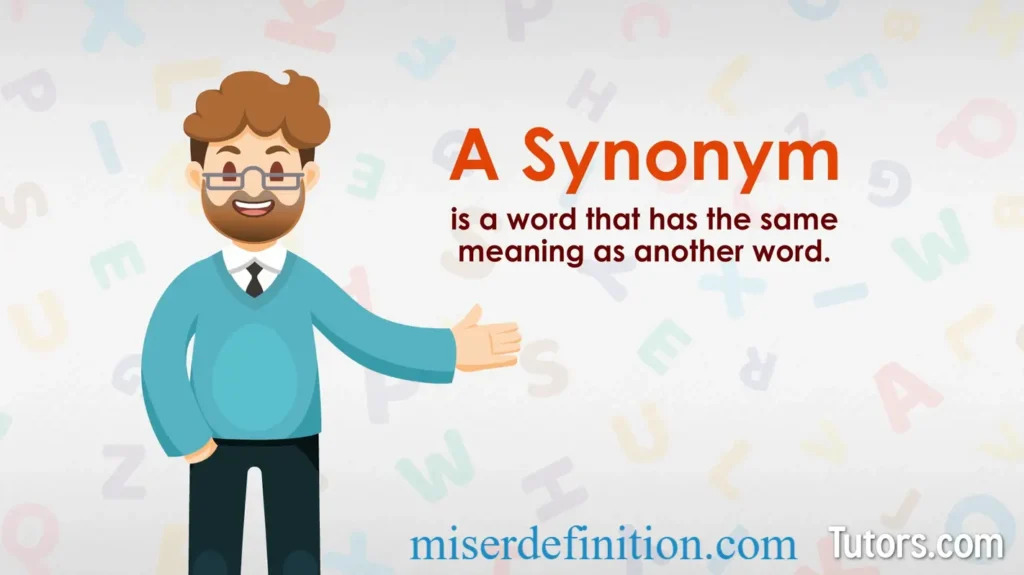
Miser Synonyms
Common synonyms and closely related words include:
- Skinflint
- Tightwad
- Cheapskate
- Scrooge
- Penny-pincher
- Hoarder
- Piker
These words are not always exact equivalents. For example, cheapskate is generally informal, while miser more strongly suggests extreme stinginess or hoarding of money.
Miser Antonyms
Common antonyms or contrasting terms include:
- Spender
- Spendthrift
- Generous person
- Benefactor
- Philanthropist
The appropriate opposite depends on the context.
For example:
Miser → Generous person
or
Miser → Spendthrift
Miser vs. Frugal
This is one of the most important distinctions when understanding the word.
| Frugal Person | Miser |
|---|---|
| Avoids unnecessary spending | Avoids spending excessively |
| Tries to get good value | Focuses heavily on keeping money |
| Saves for useful purposes | May accumulate money for its own sake |
| Can spend when necessary | May resist reasonable spending |
| Usually avoids waste | May sacrifice reasonable comfort to save |
Being frugal does not automatically make someone a miser. dictionary.cambridge.org
A person can be extremely careful with money while still spending appropriately when necessary.
Miser vs. Cheapskate
Miser and cheapskate are related, but they are not exactly the same.
A cheapskate is generally someone who is unwilling to pay or spend money, often in situations where paying would be reasonable.
A miser usually suggests a more persistent and extreme attachment to keeping money.
Example
“He was a cheapskate because he never wanted to pay his share.”
versus:
“He was a miser who accumulated money but rarely spent it.”
Miser vs. Hoarder
A miser is primarily associated with money and excessive unwillingness to spend.
A hoarder can accumulate many different types of things, including possessions.
Therefore:
Miser → Primarily money
Hoarder → Possessions or other accumulated items
The two concepts can overlap, but they are not synonyms in every context.
Examples of Miser in a Sentence
Here are some natural examples:
- The wealthy man was known as a miser because he refused to spend money on basic comforts.
- Everyone thought he was a miser because he carefully guarded every dollar.
- The character was portrayed as a miser who valued his money above almost everything else.
- Being frugal does not necessarily mean that someone is a miser.
- The story describes an old miser who has accumulated wealth over many years.
Is Miser a Negative Word?
Yes. “Miser” generally has a negative or disapproving meaning.
Calling someone a miser normally suggests that the person is excessively stingy or unwilling to spend money.
It is therefore different from neutral or positive descriptions such as:
- Saver
- Frugal person
- Careful spender
- Budget-conscious person
Can a Rich Person Be a Miser?
Yes. A person’s wealth does not determine whether they are a miser.
The term describes their attitude toward money rather than the amount of money they have.
A wealthy person may be generous, while someone with limited financial resources may still behave in a miserly way.
Can a Poor Person Be a Miser?
Yes. Miserliness is about behavior toward money, not income level.
Someone does not need to be wealthy to be described as miserly.
However, being unable to afford something is not the same as being a miser. A person who avoids spending because they genuinely cannot afford an expense should not automatically be described as a miser.
Famous Example: Ebenezer Scrooge
One of the most famous fictional examples of a miser is Ebenezer Scrooge, the central character in Charles Dickens’ A Christmas Carol.
At the beginning of the story, Scrooge is portrayed as extremely unwilling to spend money or show generosity.
Because of this portrayal, the name Scrooge has also become associated with a miserly or ungenerous person.
Other Words for a Miser
| Word | Meaning / Tone |
|---|---|
| Skinflint | Very stingy person |
| Tightwad | Informal term for someone reluctant to spend |
| Cheapskate | Informal term for someone unwilling to pay |
| Scrooge | Miserly or ungenerous person |
| Penny-pincher | Person extremely careful about spending |
| Spendthrift | Someone who spends money excessively |
Not every word in this table is a perfect synonym, so context matters.
What Is the Opposite of a Miser?
The opposite of a miser is generally a generous or open-handed person.
Depending on the context, other contrasting words include spender, benefactor, philanthropist, or spendthrift.
However, “spendthrift” does not necessarily mean generous. It usually refers to someone who spends money excessively.
Is Saving Money the Same as Being a Miser?
No. Saving money and being a miser are not the same thing.
Saving can be a sensible financial habit when someone is preparing for future expenses, emergencies, education, retirement, or other goals.
The word miser implies an excessive or unreasonable unwillingness to spend rather than simply having good saving habits.

Why Is the Difference Between Frugal and Miser Important?
The distinction matters because frugality can be positive while miserliness is generally used negatively.
For example:
“Sarah is frugal because she compares prices and avoids wasting money.”
This describes sensible financial behavior.
But:
“Sarah is a miser because she refuses to spend money even when spending is necessary.”
This describes extreme stinginess.
Frequently Asked Questions
What is the simple definition of miser?
A miser is a person who is extremely stingy with money and strongly avoids spending it.
What does miser mean?
Miser means a person who is excessively unwilling to spend money and may hoard wealth instead. The word generally has a negative meaning.
What is a synonym for miser?
Common synonyms include skinflint, tightwad, cheapskate, Scrooge, and penny-pincher. Some are informal or have slightly different meanings.
What is the opposite of miser?
Common opposites include generous person, spender, benefactor, and philanthropist. The best choice depends on the sentence.
Is miser a negative word?
Yes. Miser is generally a negative term used to describe excessive stinginess or unwillingness to spend money.
Is a miser the same as a frugal person?
No. A frugal person spends carefully and avoids waste, while a miser is excessively unwilling to spend money.
What is the origin of the word miser?
Miser comes from the Latin word miser, meaning “wretched” or “unhappy.” Its modern English sense developed into a term for an extremely stingy person.
How do you pronounce miser?
Miser is commonly pronounced “MY-zər.”
Is Scrooge a miser?
Yes. Ebenezer Scrooge is one of the best-known fictional examples of a miser, especially in Charles Dickens’ A Christmas Carol.
Can a poor person be a miser?
Yes. Miser describes a person’s behavior toward money rather than their wealth or income.
Is being cheap the same as being a miser?
Not exactly. “Cheap” can describe unwillingness to spend or pay, while “miser” usually suggests a more extreme and persistent form of stinginess.
Final Thoughts
The miser definition is straightforward: a miser is someone who is extremely stingy with money and strongly reluctant to spend it.
The word should not be confused with frugal, because careful spending and excessive stinginess are different behaviors.
Understanding the difference between a miser, frugal person, cheapskate, tightwad, hoarder, and spendthrift makes it easier to use the word correctly.
Whether you’re studying vocabulary, improving your English, or simply trying to understand a word you’ve encountered, miser is most accurately associated with extreme stinginess and an excessive desire to keep money.
About the Author
Sarah Linton is a personal finance writer and behavioral money coach with over eight years of experience helping individuals understand and reshape their relationship with money. She writes at the intersection of psychology and personal finance, making complex money behaviors accessible and actionable for everyday readers. Her work has appeared in leading financial publications and lifestyle platforms across the web.